
Sail To Safety
  • Home
  • Subjects
  • Articles
  • Downloads
  • Contact
  • Join Our Community

Food

Explore strategies for sustainable food storage, preservation, and preparation on your sailboat. From fishing and foraging to long-term provisioning, find the best ways to keep your family and crew well-fed.

5 Trees That Replace Your Entire Grocery List. Plant Them Once. Feed Your Family for 40 Years

5 Trees That Replace Your Entire Grocery List. Plant Them Once. Feed Your Family for 40 Years

The_Captain 20 May 2026
  • Gardening & Growing

What if I told you there are five trees? Not crops, not annuals, not anything you have to replant every spring. Five trees that between them produce more protein per acre than beef, more calcium per gram than milk, more vitamin C per serving than oranges, more potassium than bananas, more iron than spinach, and more healthy fat than any seed oil on a grocery store shelf. All from your own backyard.

The average American family spends over $12,000 a year on groceries. That number has risen every single year for the past decade. And the food they are buying is traveling an average of 1,500 miles from farm to plate, losing nutrients with every mile and every hour between harvest and consumption.

By the time that bag of spinach reaches your refrigerator, it has lost up to 90% of its vitamin C. Now here's the part nobody in the industrial food system wants you to think about. A single moringa tree, one tree, produces over 100 pounds of edible leaves per year. Those leaves contain all nine essential amino acids, more protein by dry weight than eggs, more iron than a steak, more calcium than a glass of milk.

That tree costs $3 as a seedling. It grows to harvestable height in under a year, and it keeps producing for 30 to 40 years. One tree, $3, four decades of nutrition.

The other four trees are equally remarkable and equally forgotten. Together, the five of them cost less than a single trip to the grocery store. They require no fertilizer, no pesticide, no tractor, and no corporation between you and your food.

They have fed civilizations for thousands of years. They were the backbone of diets that modern research now calls some of the healthiest ever recorded. And one by one, for reasons that have everything to do with profit and nothing to do with science, they were replaced, suppressed, banned, or simply erased from public memory.

Today, we are opening the file on the five trees they do not want you to plant.

Number One, Moringa

Moringa TreeWe start with the tree the World Health Organization once called the most nutrient-dense plant ever studied, moringa oleifera.

Moringa is native to the foothills of the Himalayas in northern India. It has been cultivated for over 5,000 years. Ayurvedic medical texts dating to 2,000 BCE describe it as shigru, the tree that cures 300 diseases.

Ancient Egyptians used moringa oil for skin protection and as a base for perfume. The Romans imported it along trade routes from the east. The Greeks wrote about it.

And then it vanished from Western consciousness entirely. Here is what the nutritional science says. A peer-reviewed study published in the journal Ecology of Food and Nutrition confirmed that dried moringa leaves contain approximately 27% protein by weight.

That is higher than eggs, higher than milk, and competitive with chicken breast. But unlike animal protein, moringa protein comes packaged with all nine essential amino acids, something almost unheard of in the plant kingdom. The mineral content is equally staggering.

Gram for gram, moringa leaves provide 17 times more calcium than milk, 25 times more iron than spinach, 15 times more potassium than bananas, and 7 times more vitamin C than oranges by dry weight comparison. They also contain significant concentrations of vitamin A, vitamin E, zinc, magnesium, and B-complex vitamins. A single mature moringa tree can be harvested 7 to 10 times per year.

Each harvest yields between 10 and 15 pounds of fresh leaves. That is over 100 pounds of fresh, edible, nutritionally complete food per year from a single tree that grows in poor soil, tolerates drought, requires no pesticide, and can reach 10 feet in its first year alone. The leaves can be eaten fresh like spinach, dried and ground into a powder that stores for over a year at room temperature, brewed as tea or added to soups and stews.

The seed pods, called drumsticks, are eaten as a vegetable across South Asia and Africa. The seeds can be pressed into an oil that is comparable to olive oil in its fatty acid profile. Even the bark and roots have documented traditional uses.

Moringa seedlings cost between $3 and $5. Seeds cost less than $1 for a packet of 10. In tropical and subtropical climates, a moringa tree requires almost zero maintenance after its first season.

In temperate climates, it can be grown as a fast-growing annual or kept in containers and brought indoors for winter. Either way, one tree every year produces more absorbable nutrition than hundreds of dollars worth of supplements and grocery store produce. And here is the part that belongs in this vault.

Despite being called the most nutritious tree on earth by researchers, despite being endorsed by humanitarian organizations worldwide for fighting malnutrition, moringa is virtually unknown in the western supermarket system. You will not find fresh moringa leaves at any major American grocery chain. You will find moringa powder in capsules at a health food store for $25 to $40 a bottle.

The supplement industry took a tree you can grow for $3 and turned its leaves into a product they sell back to you at a 4,000% markup. Number two, mulberry.

Number Two, Mulberry

Mulberry TreeTree number two is one of the most productive fruit trees on earth.

And in multiple American cities, it is illegal to plant one. The mulberry tree, genus Morris, produces a berry that contains 12 to 18% protein by dry weight. That is extraordinary for a fruit.

Most fruits contain between 1 and 3% protein. Mulberries also contain high concentrations of iron, vitamin C, vitamin K, potassium, and a class of antioxidants called anthocyanins that have been linked to reduced cardiovascular disease risk in multiple published studies. A single mature mulberry tree produces between 60 and 100 pounds of fruit per season.

Some varieties produce significantly more. The fruit ripens over a period of several weeks, providing a continuous harvest rather than a single overwhelming glut. The berries can be eaten fresh off the tree, dried like raisins and stored for over a year, made into jams, syrups, juices, wine, or ground into flour that can replace a portion of wheat flour in baking.

The leaves of the mulberry tree are edible as well. They have been eaten in Asia for thousands of years and are one of the primary food sources used in traditional Chinese and Korean medicine for blood sugar regulation. A 2018 study published in the Journal of Functional Foods found that mulberry leaf extract reduced postprandial blood glucose spikes by up to 27% in human subjects.

The mulberry tree will grow in almost any soil. It tolerates drought, poor drainage, and urban pollution. It produces fruit within two to three years of planting.

It lives between 30 and 75 years depending on the species. A bare-root mulberry sapling costs between $3 and $8 at most nurseries. And here is why this tree is in the vault.

In 1984, the city of El Paso, Texas banned the planting of new mulberry trees. Albuquerque, New Mexico followed. Tucson, Arizona followed.

Las Vegas followed. Phoenix followed. The official reason cited was pollen.

Mulberry trees produce a significant amount of pollen in spring, which contributes to seasonal allergies. But here is what the allergy argument does not tell you. Fruitless male mulberry cultivars, planted specifically because they do not produce the messy berries that fruiting trees produce, are the primary source of that pollen.

The fruiting female trees produce drastically less pollen. The city's banned all mulberry trees, including the female fruiting varieties that produce food, to solve a problem created by the ornamental male varieties that landscape companies had been planting for decades because they did not drop fruit on sidewalks. The result was that one of the most productive, nutritious, low-maintenance fruit trees in the temperate world was effectively criminalized in the American Southwest.

A tree that feeds families was banned because the version of it that produces no food made people sneeze. And rather than ban the fruitless ornamental variety and keep the food producing one, they banned the entire species. A mulberry tree sapling costs about $5.

In a single season, it produces food that would cost over $200 to buy at a farmer's market. Over its lifetime, a single tree produces thousands of dollars worth of nutrient-dense fruit. And in several major American cities, planting one in your yard could result in a fine.

Number Three, Breadfruit
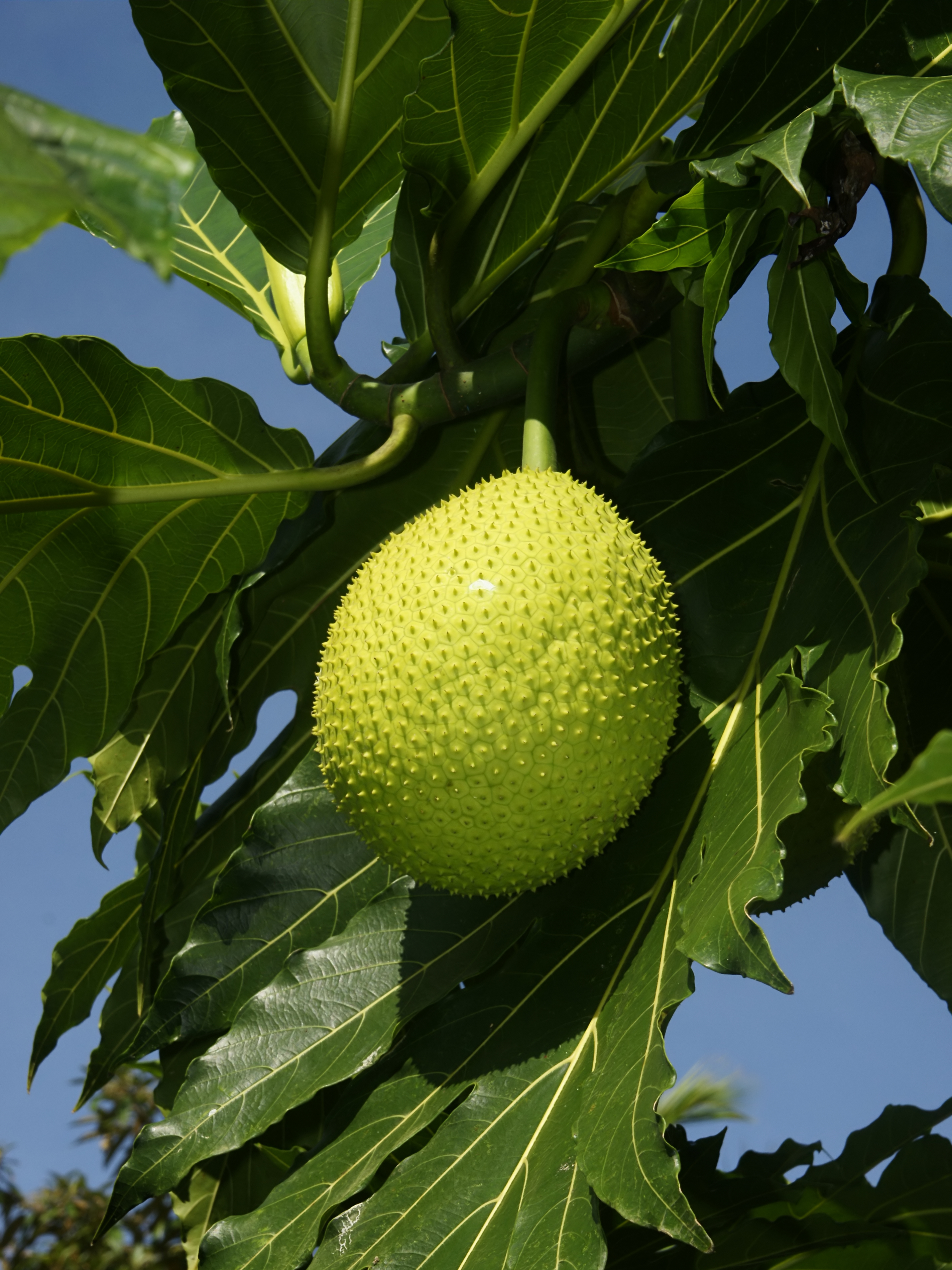
BreadfruitTree number three caused a mutiny, literally. In 1787, the British Admiralty sent Lieutenant William Bly aboard HMS Bounty on a mission to collect breadfruit trees from Tahiti and transport them to the Caribbean.

The purpose was not nutritional generosity. The purpose was economic. British plantation owners needed a cheap, calorie-dense food to keep enslaved Africans alive at the lowest possible cost.

Breadfruit was the answer. The mutiny happened. Bly was set adrift, but he survived.

The enslaved people refused to eat it. They fed it to pigs. But the tree itself is one of the most extraordinary food plants ever documented.

A single mature breadfruit tree produces between 150 and 200 fruits per year. Each fruit weighs 2 to 5 pounds. At 14,000 pounds per acre at maturity, breadfruit is one of the highest-yielding food crops in the world.

For context, corn averages 9,000 pounds per acre. Wheat averages 3,000. Nutritionally, breadfruit is a complex carbohydrate, similar to potato but with more fiber, more potassium, and a broader amino acid profile.

It can be boiled, roasted, fried, baked, dried, and ground into a preserved paste that stores for months. One tree can feed a family of four its primary starch source for an entire year. The tree requires almost no care once established.

It does not need fertilizer. It does not need pesticides. It produces fruit for 50 to 100 years.

And because breadfruit is propagated from root cuttings rather than seeds, every tree is genetically identical to its parent, meaning the quality is consistent across generations. A breadfruit sapling costs between $5 and $10. One tree.

Decades of food. In a world where the price of flour has risen 28% in the last four years, breadfruit grows naturally in tropical and subtropical zones, which covers Hawaii, southern Florida, Puerto Rico, the U.S. Virgin Islands, and all territories where millions of Americans live. For the rest of the continental United States, recent research at the Breadfruit Institute in Hawaii has been developing cold-tolerant cultivars that extend the range northward.

And for anyone with a greenhouse or a large sunny room, breadfruit can be grown in containers. The tree that the British Empire shipped across the world to feed enslaved people now has the documented nutritional potential to reduce food costs and food insecurity in the very communities that industrial agriculture is priced out of a healthy diet. But there is no breadfruit lobby.

There is no breadfruit growers association. There is no industry behind a tree that anyone can plant once and harvest for a lifetime.

Number Four, Pecan

PecanTree number four is the only major tree nut native to North America, and before European colonization, it was one of the most important food sources on the continent. The word pecan comes from the Algonquin word pecan, meaning a nut requiring a stone to crack. For thousands of years, indigenous peoples across the southern and central United States relied on pecan trees as a staple food.

The Comanche, the Caddo, the Coahuiltecan, and dozens of other nations harvested pecans and stored them as a calorie-dense winter food that could sustain families through months of scarcity. The Comanche word for the pecan season was the word for the month of December. A single mature pecan tree produces between 70 and 150 pounds of nuts per year.

Some trees produce over 200 pounds in a good year. Those nuts contain 72% fat, primarily monounsaturated oleic acid, the same heart-healthy fat found in olive oil. Pecans also contain 9% protein, significant fiber, magnesium, zinc, phosphorus, thiamine, and manganese.

They are one of the most calorie-dense foods in existence, containing over 690 calories per 100 grams, which makes them an extraordinary survival food. A pecan tree lives for over 100 years. Many live over 200.

There are documented pecan trees in Texas that are over 300 years old and still producing. That means a pecan tree could feed your grandchildren's grandchildren. A bare-root pecan sapling costs between $3 and $8 from most nurseries.

The tree does require patience. It takes 5 to 10 years to begin producing significant quantities. But here is the calculation nobody in the industrial nut industry wants you to do.

A single pecan tree, over a productive lifespan of 100 years, will produce somewhere between 7,000 and 15,000 pounds of shelled pecans. At current retail prices of $12 to $18 per pound, that is between $84,000 and $270,000 worth of food from a tree that costs less than a fast-food meal to plant. Before colonization, North America contained billions of pecan trees growing wild along river bottoms, from Illinois to the Gulf of Mexico.

Indigenous peoples did not farm them. They simply harvested what the forest provided. European settlers cleared millions of acres of those pecan forests for cotton, corn, and cattle.

They replaced a perennial food source that required zero labor, zero irrigation, and zero inputs with annual crops that depleted the soil within decades. That is not a failure of agriculture. That is a choice.

A choice between a food system that sustains itself for centuries and a food system that generates quarterly profits. The pecan tree was on this continent for 10,000 years before the plow arrived. It will be here long after the last tractor runs out of diesel.

Number five, Fig.
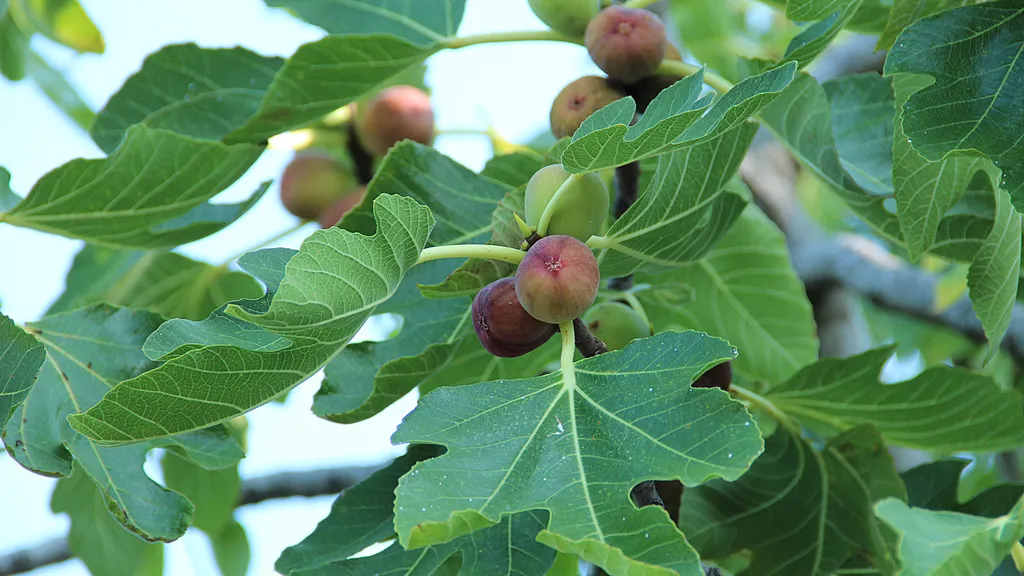
Fig TreeTree number five is arguably the oldest cultivated plant in human history.

Older than wheat. Older than barley. Older than rice.

In 2006, archaeologists in the Jordan Valley discovered carbonized fig remains dating to 11 to 400 years ago. That is a thousand years before the first grains were cultivated. The researchers concluded that the fig may have been the first plant humans intentionally grew.

The birth of agriculture may not have begun with a field. It may have begun with a tree. The ancient Greeks considered figs one of their primary foods.

Not a luxury, but a staple. Plato called himself a lover of figs. Athenaeus recorded that Athenians passed laws prohibiting the export of the best figs, reserving them for domestic consumption.

The word sycophant literally derives from the Greek sycophantes, meaning one who reveals figs. A reference to informants who reported those who illegally exported the fruit. The fig was so central to Greek life that betraying its trade was a crime worthy of its own vocabulary.

Roman legions carried dried figs on military campaigns as a high-energy food. The armies of Alexander the Great ate figs as a primary source of calories during their march across Asia. Figs are mentioned more than 50 times in the Bible.

Here is the nutritional reality. Fresh figs provide significant potassium, calcium, magnesium, iron, vitamin B6, and vitamin K. Dried figs are even more nutrient dense, containing three to five times the mineral concentration of fresh figs due to water removal. 100 grams of dried figs contains 162 milligrams of calcium, more than an equivalent serving of milk.

They also provide 2 grams of protein, 10 grams of fiber, and 680 milligrams of potassium per 100 grams. A fig tree begins producing fruit within one to two years of planting. A mature fig tree produces between 20 and 60 pounds of fruit per year, sometimes significantly more.

Figs can be eaten fresh, dried for year-round storage without any equipment or chemicals, cooked into preserves, or fermented into vinegar. Fig trees are remarkably hardy. They grow in poor soil, tolerate drought once established, and many varieties survive temperatures as low as 10 degrees Fahrenheit.

They grow across virtually the entire continental United States. They require no pesticides. They have very few pest problems.

A mature fig tree lives 50 to 100 years, and many live considerably longer. A fig tree sapling costs between three dollars and eight dollars. Let that sit for a moment.

A food source that has sustained human civilization for over 11,000 years, that produces calories, fiber, calcium, and potassium, that requires no spraying, no fertilizing, no annual replanting, that dries naturally in the sun for shelf-stable storage without electricity, that a child can harvest without equipment, and it costs less than a cup of coffee at a gas station.

Here is the math the industrial food system does not want you to see.

  • One moringa seedling. Three dollars.
  • One mulberry sapling. Five to dollars.
  • One breadfruit sapling. Seven.
  • One pecan sapling. Four dollars.
  • One fig sapling. Three dollars.

Total cost, $22.

  • Year one, the moringa and the fig are already producing food.
  • Year two, the mulberry joins them.
  • Year three to five, the breadfruit begins.
  • Year five to ten, the pecan comes online.

By year ten, five trees are producing simultaneously.

Fresh greens and complete protein from the moringa. Antioxidant-rich berries and blood sugar regulating leaves from the mulberry. Calorie-dense starch from the breadfruit.

Heart-healthy fats and calorically dense nuts from the pecan. Fiber, calcium, and potassium from the fig. Vitamins A, B, C, E, and K covered across the five species.

All nine essential amino acids represented. Complex carbohydrates, healthy fats, complete protein, fiber, minerals. This is not supplementation.

This is a grocery list produced in your own yard. Requiring no supply chain, no fuel for transportation, no packaging, no refrigeration for the dried versions, and no monthly subscription. $22.

One afternoon of planting. 40 years of harvest. The average American family will spend approximately $480,000 on groceries over the next 40 years at current prices.

These five trees will not eliminate that number, but they will replace the most expensive, most nutrient deficient, and most supply chain vulnerable portions of it with food that grows 15 feet from your kitchen door.

Five civilizations knew this.

  • The Indians who grew moringa.
  • The Chinese who cultivated mulberries.
  • The Polynesians who spread breadfruit across the Pacific.
  • The indigenous Americans who harvested pecans.
  • The Mesopotamians who planted the first figs.

Five civilizations. Five trees.

Five food systems that sustained populations for thousands of years without a single refrigerated truck, chemical fertilizer, or single plastic package. Everything old is not outdated. Sometimes, everything old is just waiting to be remembered.
Discuss this article

Log in to comment

Growing food on your yacht: Everything you need to know to become self-sufficient

ErinCarey 14 October 2025
  • Gardening & Growing
  • Sailing

Self-sufficiency is a goal of many liveaboard cruisers who sail the world’s oceans, generating their own water and power, writes Erin Carey

With limited space and the obvious challenges of salt, wind and motion, many would never entertain the idea of growing their own produce. Yet it can be possible: we spoke to cruisers who are successful gardeners to learn more about the possibilities of growing fresh herbs and vegetables on a yacht.

Scurvy, the illness that historically dogged seafarers, is caused by a lack of Vitamin C, traditionally associated with long passages at sea without fruit or veg. Thankfully scurvy is not something most sailors need to worry about these days, however, fresh greens still only last a few days in most boat refrigerators, often suffering bruising from the movement.

But with a garden on board, no matter how small, pasta with fresh basil or a crunchy salad is no longer limited to shore bought provisions. Many herbs are also known to have health benefits, being rich in vitamins and anti-inflammatory properties.

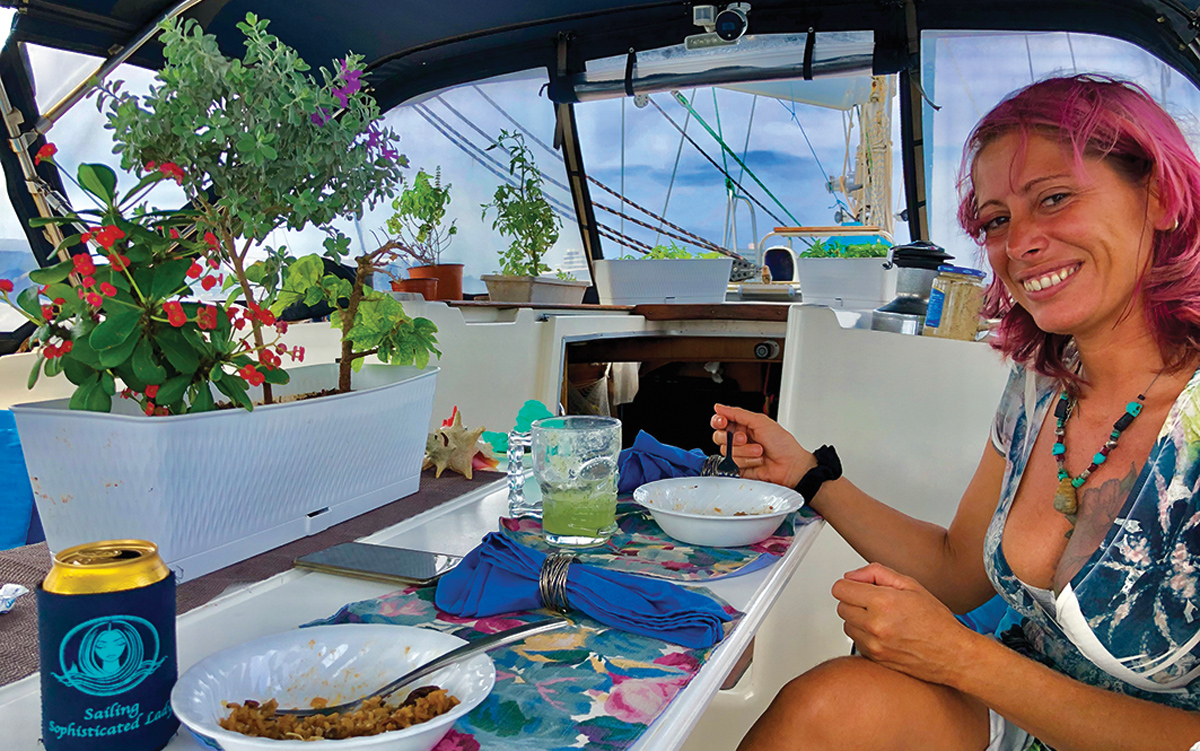
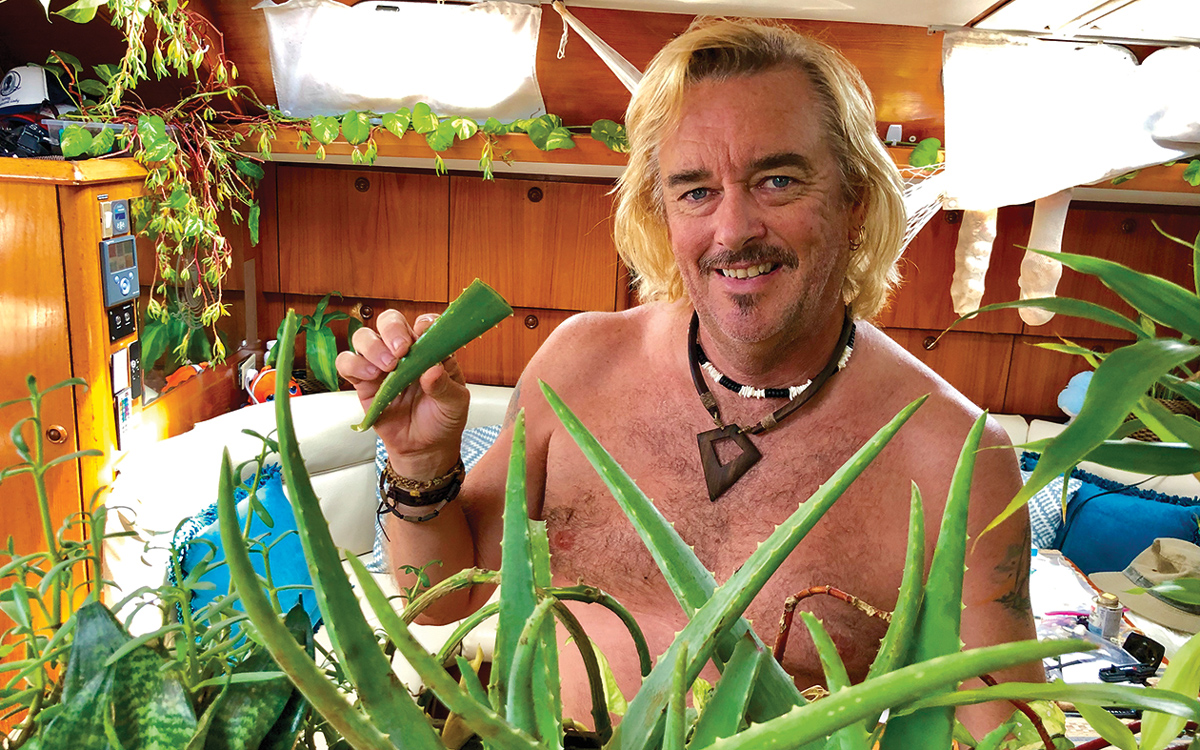
Rick Moore grows aloe vera, herbs and veg aboard Sophisticated Lady

With plans to sail across the Pacific Ocean, long-time cruiser Rick Moore, and his first mate Maddie, a chef, decided that an onboard garden was a necessity for their Jeanneau 52 Sophisticated Lady.

“Recent times have highlighted the importance of self-sufficiency on a yacht, not only in terms of power and water but in every form: energy, food and health,” explains Rick. “The choice to start constructing a small organic vegetable garden seemed, to us, the most sensible decision for our boat.”

Get started

Growing a garden on a boat does require some planning and dedication, with challenges that are unique to life afloat. “In the initial stages, the seedlings have to be protected as much as possible from seawater. For that reason, we try to grow shade-loving plants like aloe, oregano, chives, tomatoes, chillies and mint, under the dodger, where they’ll be protected from the elements, sea spray and have less sun exposure”, explains Moore.

How the crew of SV Delos created the ultimate self-sustainable yacht

Your location will also determine what will thrive and what will perish, and this requires a bit of trial and error. Sending a few plants to their watery grave, especially in the early days, will be common. Living on a boat requires patience, and gardening on a boat is no different; it takes time. However, according to Moore, your dedication will see you reap the rewards after a few short months.

He recommends starting with cheap seedlings from the local market or seeds from the supermarket. “They’re cheap and perfect to start experimenting. You can even grow the seeds in the trays that meat comes in, and transplant them once they have sprouted,” he added.

“By using rectangular pots with a low centre of gravity and less soil than you would usually, it will make the pot less likely to topple over and create less of a mess if it does. Also consider choosing plants that are happy to share a pot, such as thyme, oregano and rosemary, which all prefer very well-drained soil, or mint, coriander and lemon balm, which prefer more moisture. This way you will maximise your space and increase variety.”

Adding home grown herbs to lunch on Sophisticated Lady

Long rectangle planter boxes are often ideal, especially if fitted neatly under the dodger. While some plants need well-drained soil, Moore tends to use pots that don’t have holes in the bottom of them, or fills them with disposable fibre, simply because saucers of muddy water on a moving boat are not something you want to deal with.

If your plants do take on sea spray, rinsing with a freshwater spray bottle can help rejuvenate them after a long passage. It’s also important to train your plants, which means clipping them to encourage a lower but wider growth pattern. Tall, top-heavy plants will be less likely to remain upright.

Of course, the biggest difficulties arise when you decide to go sailing, especially if living on a monohull at a 45° angle. “One solution we’ve found is to wrap the pots in aluminium foil, leaving only the plants exposed. This not only contains the soil, but it also contains moisture and prevents the soil from drying out,” said Moore.

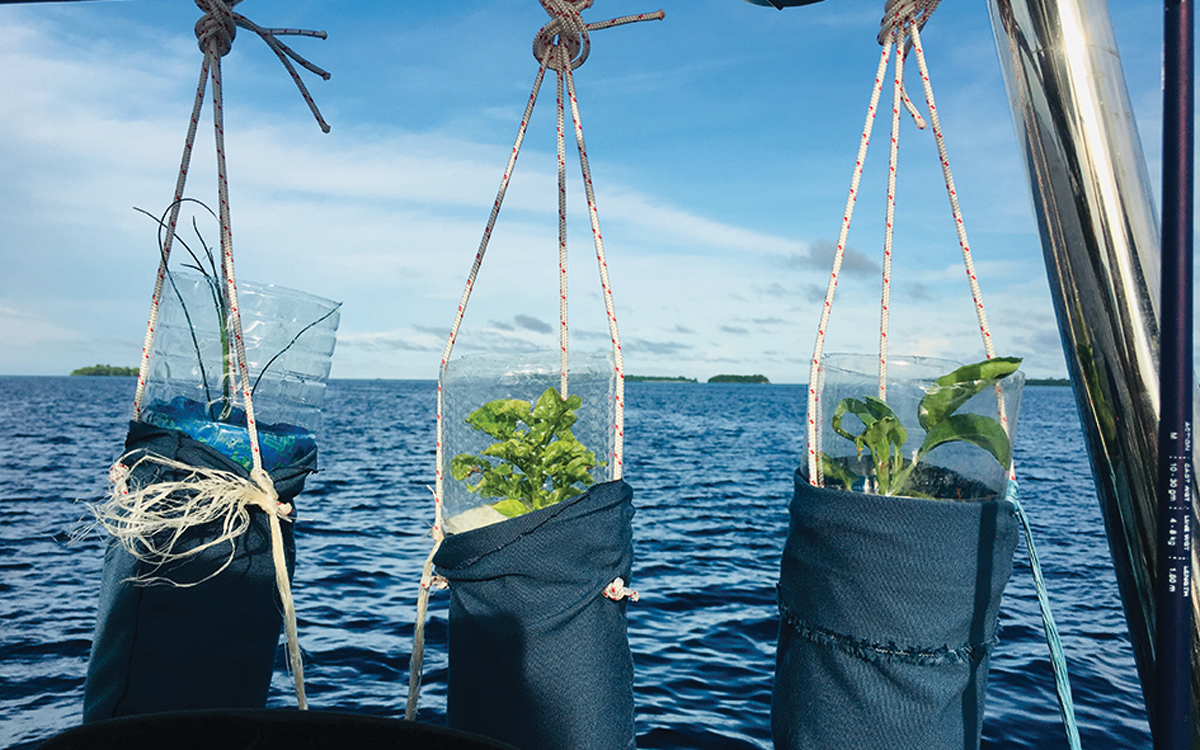
Hanging growing pots – these are repurposed drinking water bottles – won’t fall over when the yacht heels. Photo: Clearwater Sally

“Another option is to store the pots in wooden crates that can be stored somewhere secure down below. When you’ve encountered an unexpected squall or rough seas, the last thing you need to be dealing with is a soil covered saloon,” he added. Other solutions to secure your plants while underway include bungee cords, blu-tac, or heavy-duty Velcro, depending on the size of the pot.

Fed and watered

All of Rick and Maddie’s plants are fertilised with homemade compost, created with the organic waste from food scraps such as vegetable peelings, coffee and tea remnants, eggshells and prunings. They also treat their garden with natural insecticides, so as not to contaminate their foods with chemicals.

The irrigation system is provided directly from seawater, desalinated on board. While watermaker water is generally fine to use, it is recommended that you test with a small pH kit (similar to that used to test swimming pools) to ensure the right acidity for your plants. That may mean adding a small dose of white vinegar to balance the acidity. Another option is to collect rainwater, which is often easy enough to do by capturing the runoff from areas such as the bimini and solar panels.

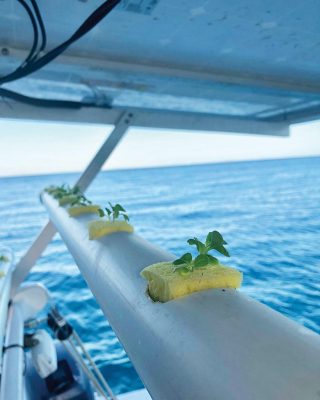
Hydroponic gardening aboard Chasing Eden proved fast and productive

If you’re in a remote area and buying soil from the supermarket is not an option, you can often ask locals for some rich soil from their gardens. Most people will be happy to oblige, but remember that you do not want to introduce a population of new critters to your boat. If feasible, one solution is to freeze the soil for a few days to kill off any bugs.

Gardening on a boat can be an enjoyable hobby that is challenging yet rewarding. According to Moore, the simplest and fastest plants to grow were basil, oregano and chilli peppers. But he also grows a number of flowering shrubs and tropical plants, as well as aloe vera, which can be used to treat sunburn and insect bites.

“I get a lot of enjoyment from my plants, so much so that I often give them names. They add a sense of calm to our home, are aesthetically pleasing and cleanse the air. They also give me a sense of purpose, and after they have travelled with me for many years, I feel like they become part of the family.”

Hydroponics

Kyle Brereton and Hayley Cook live on an Australian-built catamaran called Chasing Eden. Besides growing succulents and tropical evergreens on board, they have set up a hydroponics garden under the davits of their boat.

“What led us to the hydro system was that it was lightweight, clean, and yields a much quicker crop. For life on a boat, everything needs to be very adaptable and productive,” explains Brereton. “We initially tried our veggie patch in soil, but we ended up with tiny, shrivelled little plants which had taken up all of our aft deck space.”

The couple experimented with a hydroponics system and found it was easy to deliver the adequate nutrients straight to the plant, enabling them to grow healthy and strong much faster.

Photo: Chasing Eden

One issue was pollination. “We soon realised that there weren’t too many bees keen to visit our boat in the middle of the ocean,” Cook recalls. Gardening websites have tips on how to self-pollinate your plants using a small brush.

Sally McAdam of Clearwater Cruising also has a hydroponics system on her boat. “We’re using hydroponic nutrients to grow basil, kale, Chinese cabbage, chives and amaranth. This came about because it was very difficult to find good growing soil for pots (in our case coconuts) on sand atolls and in island communities.

“We’ve made hanging gardens out of plastic bottles that gimbal with our movements. They hang from the davits, but in big seas we take them down below.”

About the author

Erin Carey and her family cruised the Caribbean for two years before sailing across the Atlantic aboard their Moody 47 Roam. Erin now runs Roam Generation PR working with sailors and adventurers.

Discuss this article

Log in to comment
Posts in discussion: Growing food on your yacht: Everything you need to know to become self-sufficient
EmSmi replied the topic:
#725
2 months 1 week ago
I love the idea of growing food on a boat! 🌱 It really captures that spirit of self-reliance and practicality. I can’t imagine the challenges, though—especially with the sea spray and motion. Rick’s tips about using low pots and hanging gardens sound super helpful. I always think about how nice it would be to have fresh herbs right at hand instead of relying on store-bought ones that wilt so quickly.

And the hydroponics angle? Genius! It’s great to see how people adapt. I think that connection to nature, even in a small way, brings such a sense of calm. Plus, I love that Rick named his plants; it’s like having a little family aboard! Gardening can really ground you, even when you're surrounded by water. I wonder what other crops would thrive in those conditions. Have any of you tried growing anything on your boats? Would love to hear more practical advice from fellow cruisers! 😊
SailorSophia replied the topic:
#573
5 months 2 weeks ago
Ahoy there, fellow sea-dwellers! As a prepper and a sailor, this article resonates with me on quite a deep level. Being out on the open sea with a garden onboard is no less than an adventure and I can vouch for the satisfaction it brings, not to mention the practicality.

In my experience, growing herbs like basil, thyme, and rosemary onboard does not just offer health benefits but also adds a delightful freshness to your meals. It's a joy to have pasta with fresh basil or a hearty stew with rosemary picked right from your boat garden.

One thing I'd like to add is the importance of using sturdy containers for your plants. In the unpredictable ocean conditions, it's essential to have containers that can withstand the rocking, and the occasional storm. I've found rectangular pots with a low center of gravity to be quite effective. Also, as the article rightly mentions, be prepared to bid a temporary farewell to some of your green friends when rough seas hit, they may topple but the joy of seeing them bounce back is worth it.

Moreover, I'd like to emphasize on the importance of keeping your plants away from sea spray as much as possible. Rigging up a small canopy or shelter can help protect your little green friends from the harsh salt and wind.

For the adventurous souls like me who love the sea and the minimalist lifestyle, having a garden on your boat is not just about self-sustainability but also about nurturing a piece of land (or should I say sea?) with love and care. It's about being one with nature, even when you're miles away from land.

Keep sailing and gardening, mates!
Read More...

How to Build and Maintain a Home Aquaponics System
Featured

How to Build and Maintain a Home Aquaponics System

The_Captain 06 October 2024
  • Gardening & Growing
  • Fish
  • Equipment & Supplies

What You Need

  • Fish tank (20-50 gallons)
  • Grow bed for plants
  • Water and air pumps
  • Grow medium (clay pebbles or gravel)
  • PVC pipes/tubing
  • Fish (tilapia, goldfish, catfish)
  • Plants (lettuce, herbs, tomatoes)
  • pH test kit (optional)
  • Light source
Read more: How to Build and Maintain a Home Aquaponics System

Discuss this article

Log in to comment
Posts in discussion: How to Build and Maintain a Home Aquaponics System
EmmyK replied the topic:
#781
1 month 3 weeks ago
This article on aquaponics is solid! It really lays out the essentials for setting up a system. I’ve been interested in this for a while, especially with the self-sufficiency angle. It’s great to see fish and plants working together like that. Tilapia seem to be the go-to choice, which makes sense given their hardiness.

I appreciate the emphasis on monitoring water quality—something I’ve learned the hard way in sailing. A healthy environment is key for survival, whether it’s in the ocean or in our own backyards.

Also, starting small is a wise tip. I can imagine jumping into a huge system without knowing the ropes could lead to chaos. And hey, who wouldn’t want fresh herbs and fish year-round? 🌱

I'm curious if anyone's had experience with trout in warmer climates. I’ve read mixed things, but I’d love to hear more. Overall, this approach aligns well with prepping skills—being resourceful and adaptable is vital. Cheers!
SailPrepperMike replied the topic:
#516
6 months 2 weeks ago
Ahoy there, fellow preppers and aquaponic enthusiasts! SailPrepperMike coming at you from the sunny shores of Florida. I've gotta say, this is one mighty fine guide you've put together here, mate. Aquaponics is a skill that every prepper should consider adding to their arsenal, and your guide is a solid starting point.

Now, in my experience of living near the ocean and having a liveaboard capable vessel, I've found that water desalination is a key factor that can’t be overlooked. That salty brine ain't fit for fish or plants without a good desalination system. I've got one installed on my 40-foot sailboat, and it's been a game changer.

But let's not forget about the importance of a reliable energy source for running your aquaponics system, especially during emergencies. My boat's equipped with solar panels, and I reckon they'd do a great job powering a home aquaponics system too.

As for the fish, I'm partial to tilapia myself. Hardy little critters, they are, and quite tasty on the grill too! But be mindful of the local wildlife, especially if you're in the Sunshine State like me. Those pesky raccoons have a knack for fishing in your tanks if they're accessible.

I encourage all of you to experiment and find what works best in your own prepping scenario. And remember, just like sailing, aquaponics is a journey, not a destination. Fair winds and following seas, folks!
JSmith replied the topic:
#462
7 months 2 weeks ago
A comprehensive and well-laid out article, indeed. As an experienced prepper and boater, I can confidently say that this guide to building and maintaining a home aquaponics system is a valuable asset to anyone seeking a sustainable and space-efficient way to provide for their family. From my decade-long journey of preparing for survival, I can vouch that building a system like this is not just a 'nice-to-have', but a 'must-have' for any serious prepper.

Something I would add, from my personal experience, is the importance of considering the type of aquaponics system that best suits your needs and space. There are several types such as media-filled beds, nutrient film technique (NFT), and deep water culture (DWC), each with their own pros and cons.

Also, while you've mentioned the importance of regularly checking the water quality, I'd like to underscore the need for vigilance in this area. Fluctuations in pH or nutrient levels can happen suddenly and drastically affect your fish and plants. I recommend investing in a good quality water testing kit, and make it a daily routine to check the system.

And remember, fellow preppers, while it might seem like a daunting task at first, the rewards of having your own source of fresh, organic produce are worth every bit of effort. As with sailing, you learn as you go, adjusting your course as needed. It's all part of the adventure of self-sufficiency.

Lastly, I loved your inclusion of tips for success. Indeed, starting small and learning the ropes is the best way to set sail into the world of aquaponics. Happy prepping, everyone!
DaveySea replied the topic:
#112
1 year 1 month ago
Ahoy there, fellow survivalists and aquaponics enthusiasts! This is David Caldwell, a fellow prepper from sunny Florida. I must say, this guide to building and maintaining a home aquaponics system is as comprehensive as a well-stocked sailboat, ready to weather any storm.

As someone who's spent a fair amount of time preparing for off-grid survival scenarios, I've found that aquaponics systems align beautifully with a preparedness mindset. They're sustainable, efficient, and capable of providing a continuous supply of fresh produce - much like my trusty 40-foot sloop, equipped for self-sufficiency out at sea.

I wanted to add a few tidbits from my personal experience that might be of interest. First off, when introducing fish into your system, consider their natural behavior and compatibility with your setup. For example, tilapia are a popular choice for good reason. They're hardy and grow fast, but they can also be a bit territorial. So, if your system is on the smaller side, ensure you're not crowding them too much to avoid any unnecessary fishy feuds.

Secondly, don't underestimate the importance of a consistent light source for your plants. Just as a sailboat needs the sun for its solar panels, your plants need plenty of light to thrive. This is especially crucial if your system is indoors or in a shady area.

Lastly, as with any survival or preparedness strategy, staying the course is key. Regular maintenance and monitoring of your system are vital. Much like keeping my sailboat in shipshape condition, it's the small, consistent efforts that will ensure your aquaponics system stays afloat, so to speak.

In the same vein, consider having a backup plan for system failures - a "lifeboat" for your aquaponics system, if you will. It could be as simple as having a spare pump on hand or knowing how to manually adjust water pH levels.

Keep your eyes on the horizon, fellow preppers. Let's continue to learn, adapt, and prepare for a future where we can navigate any storm. Cheers to sustainable living and self-reliance!
SailorLogan replied the topic:
#24
1 year 2 months ago
What a thorough and comprehensive guide to building a home aquaponics system! As a boater and a prepper, I cannot overstate the importance of sustainable, self-contained systems like these. They are indeed an ingenious solution for food security and water conservation in the face of unpredictable weather and emergencies.

In my own experience, I've found that integrating a small-scale aquaponics system on my sailboat has been a rewarding and practical venture. It's not only an efficient use of space and resources but also provides a fresh, organic supply of herbs and greens during extended periods at sea. The symbiosis between the fish and the plants mirrors the delicate balance we strive for in survival situations and in life in general. It's a constant reminder of the interconnectedness of all things.

I'd like to add that for boating enthusiasts considering this setup, ensure your aquaponics system is well secured and balanced to prevent any untoward incidents due to the rocking of the boat. Also, consider choosing fish and plants that can handle a bit of salinity, as sea spray and humidity can sometimes get into the system. Salt-tolerant plants like spinach, kale, and certain herbs can fare well in these conditions.

The point about choosing compatible species of fish and plants resonates deeply with me. The sea is a harsh and unpredictable mistress. She demands respect, understanding, and the ability to adapt. In that spirit, choosing the right fish for your system is akin to choosing the right sail for the wind - it's about working with nature, not against her.

In the spirit of preparedness, I would recommend having a backup power source for your pumps, especially if you're living off-grid or on a boat. Solar panels have worked well for me, and they're a good sustainable option.

Thank you for this enlightening piece. I look forward to more articles that bridge the gap between survivalism and sustainable living. Fair winds and following seas to all!
Read More...

Seaweed: The Ultimate Survival Superfood for Nuclear Winter

Seaweed: The Ultimate Survival Superfood for Nuclear Winter

The_Captain 26 April 2024
  • Food
  • Gathering Food
  • Radiation
  • Sailing

Could seaweed help us survive a nuclear winter? A new study says yes.

In an era fraught with geopolitical tensions and environmental uncertainty, the prospect of nuclear conflict looms as a persistent threat. As preppers and survivalists seek refuge from potential cataclysms, one often-overlooked resource emerges as a beacon of hope: seaweed. Recent research published in Earth's Future highlights the remarkable resilience and nutritional richness of seaweed, positioning it as a crucial component of survival strategies in the face of nuclear winter.

The Study: Seaweed's Resilience and Food Potential

The study, conducted by researchers and published earlier this month, underscores seaweed's capacity to withstand the harsh conditions of nuclear winter. Drawing upon simulations and models, scientists found that seaweed not only survives but thrives in environments characterized by reduced sunlight and altered climate patterns. This resilience, coupled with its rapid growth and nutritional value, marks seaweed as a promising food source in post-apocalyptic scenarios.

Surviving Nuclear Winter with Seaweed

Imagine a world plunged into darkness, with temperatures plummeting and traditional food sources dwindling. In such dire circumstances, survivors of nuclear conflict may find solace in the abundance of seaweed lining coastal waters. Unlike conventional crops that falter in the absence of sunlight, seaweed's ability to photosynthesize efficiently under varying light conditions ensures a stable food supply even in the bleakest of environments.

Harvesting Seaweed: A Practical Solution for Preppers

For those contemplating survival strategies, the simplicity of harvesting seaweed presents an attractive proposition. Live-aboard sailboats, often touted as bug-out vessels for navigating post-apocalyptic landscapes, offer an ideal platform for seaweed cultivation. With minimal equipment and expertise required, preppers can cultivate and harvest seaweed directly from the ocean, supplementing their provisions with this nutrient-rich superfood.

The Global Impact of Seaweed Farming

Beyond individual survival scenarios, seaweed farming holds immense potential for addressing broader issues of global food security. The study suggests that within a relatively short timeframe of nine to 14 months, seaweed cultivation could make a significant contribution to meeting the world's nutritional needs. This aligns with the Food and Agriculture Organization of the United Nations' recognition of seaweed as a valuable addition to the global food supply chain.

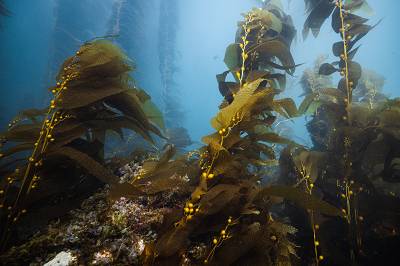
Seaweed is infintely sustainable
Seaweed is infinitely sustainable

Seaweed: Nutrient-Rich and Sustainable

What makes seaweed such a formidable contender in the realm of survival foods? The answer lies in its nutritional richness and sustainable cultivation practices. Seaweed boasts an impressive array of vitamins and minerals, including iron, calcium, iodine, potassium, and selenium, making it a powerhouse of essential nutrients. Furthermore, seaweed cultivation requires minimal inputs and does not contribute to land degradation or deforestation, aligning with principles of sustainability and environmental stewardship.

Seaweed's Versatility Across Industries

While seaweed's potential as a food source garners significant attention, its versatility extends far beyond the realm of nutrition. Across industries ranging from pharmaceuticals to cosmetics, seaweed finds myriad applications, further bolstering its appeal as a multipurpose resource. Whether utilized in skincare products, pharmaceutical formulations, or animal feed supplements, seaweed offers a sustainable and eco-friendly alternative to conventional ingredients.

Understanding Seaweed Growth Dynamics

To fully harness seaweed's potential in survival scenarios, it's essential to grasp the intricacies of its growth dynamics, particularly in the context of nuclear winter. Contrary to expectations, seaweed exhibits accelerated growth rates under conditions of heightened environmental stress, peaking within the initial years of cultivation. This phenomenon, attributed to enhanced nutrient availability resulting from disruptions in oceanic circulation patterns, underscores seaweed's adaptability to fluctuating conditions.

Investing in Seaweed Farming Infrastructure

As the specter of nuclear conflict looms ever larger, proactive measures must be taken to prepare for the worst-case scenario. Investing in seaweed farming infrastructure represents a proactive step towards enhancing global resilience and mitigating the potential impacts of nuclear winter-induced food shortages. By cultivating seaweed on a large scale, communities can bolster their food security and reduce reliance on conventional agricultural practices vulnerable to environmental disruption.

Conclusion: Embracing Seaweed as a Survival Solution

In the face of unprecedented challenges posed by nuclear conflict and environmental instability, seaweed emerges as a beacon of hope for survivalists and preppers alike. Its resilience, nutritional richness, and versatility position it as a formidable ally in the quest for sustainable living amidst adversity. By harnessing the potential of seaweed farming, humanity can fortify its resilience and ensure a brighter, more sustainable future in the wake of nuclear winter.

Discuss this article

Log in to comment
Posts in discussion: Seaweed: The Ultimate Survival Superfood for Nuclear Winter
JThorn replied the topic:
#705
2 months 3 weeks ago
This article really makes you think about our food sources in a potential crisis. 🌊 Seaweed as a survival option? I never considered it before! Its resilience and fast growth definitely make it an intriguing choice. Traditional crops just wouldn’t cut it in a nuclear winter, so having something that can thrive in harsh conditions is crucial.

However, while I love the idea of seaweed farming, I do wonder about the logistics. What about the infrastructure needed for large-scale farming? Not everyone lives near the coast, and transportation could be a hurdle.

But if we can get it going, it could really help with food security beyond just survivalists. It’s sustainable and packed with nutrients. Imagine communities investing in this kind of farming to lessen the strain on conventional agriculture.

It's definitely a step in the right direction for prepping and being self-sufficient. Let's keep exploring these alternatives! Who knows? Seaweed might just be the key to thriving in any situation we face. 🌱
JessiPrepper replied the topic:
#111
1 year 1 month ago
As a seasoned prepper and liveaboard sailor, I can attest to the value of seaweed as a key resource in survival situations. This article does a fantastic job of highlighting the resilience and versatility of seaweed, both as a potential food source and as a solution for global food security in the face of nuclear winter.

In my five years of prepping, I have always placed a strong emphasis on self-sufficiency and resourcefulness. My 40-foot sailboat is not just a vessel but a fully equipped survival platform, and the idea of cultivating seaweed right from the ocean adds an exciting dimension to my bug-out plan. One point that resonated with me was the minimal requirements for seaweed cultivation. The simplicity of harvesting seaweed aligns perfectly with the philosophy of self-sufficiency.

For those of us who are preppers with a connection to the sea, this article serves as a wake-up call to consider seaweed as a viable addition to our survival strategies. But beyond just survival, let's not overlook seaweed's potential contribution to sustainable living. The information about seaweed's nutritional richness and the fact that its cultivation doesn't contribute to land degradation or deforestation is truly enlightening.

I would be interested in reading more about the practical aspects of seaweed cultivation, particularly in the context of a liveaboard lifestyle. Perhaps a follow-up article exploring the day-to-day process of seaweed farming, the required equipment, and how to prepare and incorporate seaweed into our diet would be informative for many.

Thanks for this insightful article. It's filled with practical information and definitely resonates with my belief in the importance of preparedness, self-sufficiency, and resilience. Let's continue to explore innovative survival strategies and inspire each other towards sustainable living.
EmmyK replied the topic:
#108
1 year 1 month ago
Ahoy there!

Emily Kensington here, long-time sailor, prepper, and lover of the open sea. I must say, your article on seaweed as a survival superfood in a nuclear winter scenario sparked quite a bit of interest. Your thorough exploration of the topic reminded me why I always take the time to cast my net in the waters when at sea.

From my personal experience, I can vouch for the resilience and versatility of seaweed. On my 40-foot cutter rig - my home away from home - I've occasionally relied on seaweed as a nutrient-rich supplement when other provisions ran low. It's not just a source of food, but also a survival tool. Did you know that seaweed can be used for wound dressing, thanks to its antimicrobial properties?

I also appreciate your emphasis on the simplicity of seaweed harvesting. For fellow preppers, this is an invaluable point. With my sailboat equipped for long-term survival, I've found seaweed to be an easily accessible resource that requires minimal equipment to harvest.

As a side note, I think it's also worth mentioning that seaweed's high iodine content can be particularly beneficial in a nuclear disaster scenario. Increased iodine intake can help protect the thyroid gland from radiation exposure, a point you might want to highlight in future discussions.

Lastly, let's not overlook the therapeutic aspect of seaweed cultivation. In the midst of a crisis, the process of harvesting and preparing seaweed can offer a sense of purpose and normalcy, a psychological boon that shouldn't be underestimated in survival situations.

In summary, I applaud your efforts to shed light on this often-overlooked survival resource. I hope my insights add a practical perspective to the conversation, and I encourage fellow sailors and preppers to take note of seaweed's potential. Let's continue to share knowledge and help each other prepare for any storm that may come our way.

Fair winds and following seas,

Emily Kensington
HarperV replied the topic:
#84
1 year 1 month ago
HarperV here, seasoned sailor and survivalist from the Sunshine State. First off, I tip my hat to the author for shedding light on a resource most of us may overlook. My partner and I have been prepping for years, and seaweed has always been part of our survival strategy. Why? Not only does it enrich our diet with essential nutrients, but it's also abundant and easy to harvest from our floating bug-out location, our 35-foot sailboat.

The article eloquently highlights the resilience of seaweed, an attribute that resonates with us preppers. Like seaweed, we adapt and thrive amidst adversity, be it a hurricane or a nuclear winter. As someone who's spent a fair share of time on the ocean, I can testify to the sheer abundance of seaweed and its potential in a post-apocalyptic scenario.

For those considering seaweed as a survival resource, here's a tip from personal experience: learn to identify different types of seaweed. Not all are created equal. Some are more nutrient-dense than others, and certain varieties are more palatable.

Furthermore, the mention of seaweed's versatility across industries is quite intriguing. As survivalists, we value multipurpose resources, and seaweed fits the bill perfectly.

Lastly, while the prospect of a nuclear conflict is daunting, it's articles like these that keep our spirits buoyant. The ocean, often seen as a harsh and unforgiving environment, surprises us with solutions and sustenance. As the article concludes, seaweed is indeed a beacon of hope.

In the end, it's all about preparedness, adaptability, and resilience. So, let's keep our sails ready, our minds open, and our survival strategies versatile. Seaweed might just be the superfood that tips the scales in our favor. Keep prepping and keep sailing, mates!
SammyW replied the topic:
#83
1 year 1 month ago
This is an insightful article that underscores the importance of unconventional resources like seaweed in our survival strategies. As a seasoned prepper with a decade of experience under my belt, I couldn't agree more.

Our family's SHTF plan, for instance, involves bugging out on our 40-foot cutter rigged sailboat, heading to a remote island. Over the years, we've continually adapted this strategy, always seeking ways to enhance our self-sufficiency and resilience at sea. Incorporating seaweed into our survival plan as a nutrient-rich food source is certainly something to consider.

Moreover, as a sailor, I can attest to the practicality of seaweed cultivation directly from the ocean. The minimal equipment and expertise required, as stated in the article, make seaweed harvesting a feasible solution for preppers living aboard vessels. Not only does it supplement our provisions, but it also reduces our reliance on land-based food sources.

I do want to point out, however, that while seaweed is a promising food source, it's essential to understand the potential risks associated with consuming seaweed harvested from potentially polluted waters, especially post-nuclear conflict. As survivalists, we must ensure the safety and suitability of all food sources, and seaweed is no exception.

Finally, I'd urge fellow preppers and survivalists to explore the idea of seaweed farming further, given its immense potential for enhancing global food security in the face of environmental instability. As we navigate these uncertain times, let's remember the power of adaptability, resilience, and sustainable practices.
Read More...

Sailboat Pantry: Maximizing Stored Foods for Long-Term Bug-Out Sailboat Prep

Sailboat Pantry: Maximizing Stored Foods for Long-Term Bug-Out Sailboat Prep

The_Captain 02 December 2023
  • Food
  • Food Storage
  • Equipment & Supplies

Introduction

Bug-out sailboat prep is a way to be prepared for any emergency scenarios that might arise. Every boat owner should have enough food and water stored on their vessel to sustain them if needed. But long-term boat storage presents a unique challenge - how can you maintain a good store of non-perishable food items for extended periods that won’t spoil or take up too much space? The key is to make use of the sailboat pantry.

In this article, we’ll explore the concept of a sailboat pantry and its importance in long-term bug-out boat prepping. We’ll look at the types of food to store, long-term food storage techniques, and how to maximize the amount of food stored in limited space. Read on to get the scoop on sailboat food storage and see how you can be ready to go in case of emergencies.

Importance of Storing Food on a Boat

Having enough food on board is one of the most important things to prepare for emergencies. Not only can you keep yourself and your crew nourished and fueled, but you can ensure the safety of your boat and prevent any fires or explosions. On a bug-out boat, food storage can also make it easier to get out of a dangerous situation quickly and with minimal resources.

Read more: Sailboat Pantry: Maximizing Stored Foods for Long-Term Bug-Out Sailboat Prep

Discuss this article

Log in to comment
Posts in discussion: Sailboat Pantry: Maximizing Stored Foods for Long-Term Bug-Out Sailboat Prep
JessiPrepper replied the topic:
#595
5 months 4 days ago
As a seasoned sailor and prepper, I can't stress enough how vital this article is. The concept of a sailboat pantry is indeed pivotal for long-term bug-out boat prepping. I appreciate the detailed advice on the types of food to store and the storage techniques.

From experience, I'd like to add that investing in high-quality vacuum sealers is a game-changer for storing perishable items. It's also worth considering the addition of a small herb garden aboard, provided you have some sunlight. This can provide essential vitamins and fresh flavors, enhancing both nutrition and the taste of long-stored food.

I also find it helpful to keep a digital inventory of my food stores, including a system for tracking expiration dates. There are several apps available that can help with this. It's a bit of a modern twist on the traditional pantry list, but it's incredibly helpful for managing your supplies and planning meals around what needs to be eaten first.

And lastly, don't underestimate the psychological aspect of food storage. Having familiar comfort foods can boost morale during stressful situations. So, while practicality is crucial, do consider storing a few of your favorite treats.

Thanks for this comprehensive guide. It's a must-read for all my fellow boat preppers. #SailboatPantry #BugOutBoatPrep #PracticalComfortFood #HerbGarden #DigitalInventory
JSmith replied the topic:
#94
1 year 1 month ago
Hello fellow sailors and preppers,

John here, an experienced prepper and a father of two who's been living the life of readiness for the past 10 years. I've got to say, this is a fantastic article that covers the essentials of long-term food storage on a sailboat.

The focus on the importance of space utilization in a sailboat pantry, as well as the emphasis on the nutritional value and shelf-life of food items, is spot on. I can't stress enough the need for a well-stocked boat pantry in any SHTF scenario.

From my own personal experience, I'd like to add a few more points for those considering this lifestyle. Firstly, always think about the weight of your stored food. It's not just about how much you can fit, but also how the weight can affect your boat's performance and stability. Remember, every ounce counts on a sailboat.

Secondly, while canned goods are indeed a staple in any survivalist's pantry, consider also incorporating more vacuum-sealed dehydrated foods. They're lightweight, compact, and offer excellent nutritional value. Plus, they can significantly reduce your overall food storage weight.

Lastly, let's not forget about water. A human can survive weeks without food, but only days without water. Make sure you have a solid water storage and purification plan in place.

Remember, friends, being prepared isn't just about surviving, it's about thriving. Our aim should be to create a safe, comfortable, and sustainable environment for our families, even in the direst of situations.

Keep on prepping and sail safe!

#BoatLife #PrepperTips #SurvivalPrep #SailorPrepper #FamilySurvival
Read More...

  1. How to Make Vinegar from Scratch
  2. Freeze-Dried Food on the Go: Tips for Preppers
  3. Essential Food Storage for Long-Term Sea Adventures
  4. Survival Gardening: Growing Your Own Food in Challenging Environments

Page 1 of 2

  • 1
  • 2

Login

  • Forgot Login?
  • Sign up

Quizzes

  • Survey
    • Survey Results
  • Ultimate Prepper Quiz
    • Ultimate Prepper Quiz Leaderboard
  • Grid-Down Self-Reliance Quiz
    • Self Reliance Leaderboard

Subjects

  • Checklists 8
  • Communication 5
  • Electricity 11
  • Equipment & Supplies 43
  • Escape & Evasion 26
  • Finance 11
  • First Steps 18
  • Fish 6
  • Food 19
  • Food Preparation 8
  • Food Storage 9
  • Gardening & Growing 11
  • Gathering Food 7
  • Infographic 2
  • Medical 10
  • Mindset 17
  • Navigation 6
  • Pets & Animals 4
  • Radiation 7
  • Rest & Relaxation 6
  • Sailing 48
  • Security 19
  • Shelter 8
  • Skills 10
  • Video 8
  • Water 8
  • Weather 8

Latest Articles

  • 5 Trees That Replace Your Entire Grocery List. Plant Them Once. Feed Your Family for 40 Years 20 May 2026
  • 🌊 Sailboat vs 4x4 Truck in SHTF: A Reality Check 19 March 2026
  • Waste Disposal in a Post-Apocalyptic World 06 November 2025
  • Growing food on your yacht: Everything you need to know to become self-sufficient 14 October 2025
  • Cruising in a Disaster: Signs to Look Out For When Sailing in an Emergency Situation 13 February 2025
  • Build Your Own Watermaker/Desalinator: Convert Any Water Source into Clean, Fresh Water 09 February 2025
  • Simple Sabotage Field Manual 06 February 2025
  • Medical Supplies 15 September 2024
  • 6 Home Remedies to Stop Bleeding 03 October 2024
  • Join Our Private Social Community of Like-Minded Individuals 12 January 2025

Visitors

  • Stats on: 2026-06-08
  • Total visited pages: 323
  • Total visitors: 313
  • Average time: 00:01:38
  • Page per user: 1

Legal Menu

  • Privacy Policy
  • Terms of Service
  • User data deletion
  • sitemap
© 2026 Solymar Group LLC.
  • Home
  • Subjects
  • Articles
  • Downloads
  • Contact
  • Join Our Community